
California DROS Explained in Plain English | Route 66 Guns & Ammo
Buying a firearm in California can feel confusing, especially if it is your first time. One of the first terms you will hear is DROS, and a lot of people are not exactly sure what it means.
In plain English, DROS stands for Dealer Record of Sale. It is the process California uses when you buy or transfer a firearm through a licensed firearm dealer. DROS is part background check, part state paperwork, and part firearm transfer record.
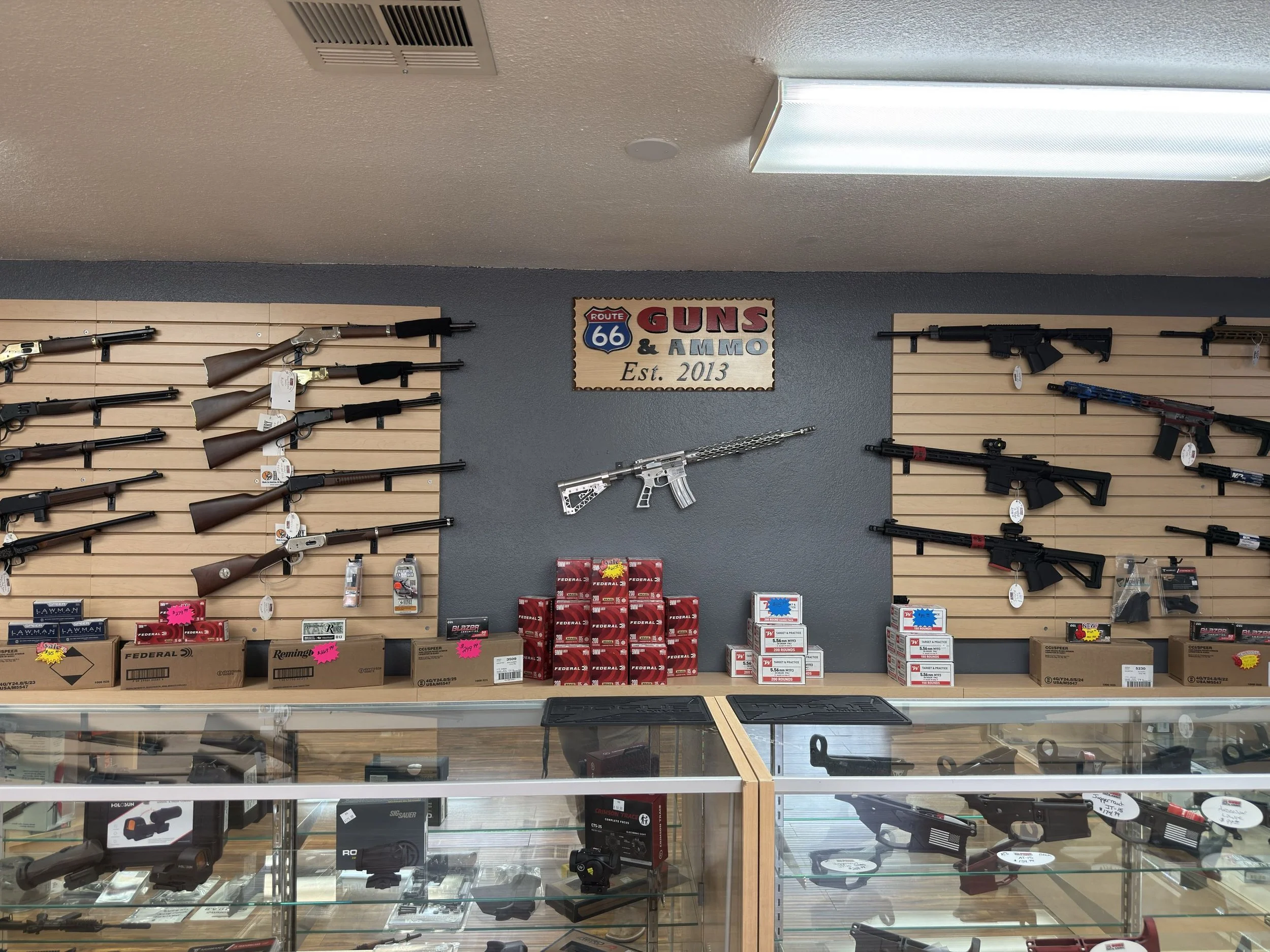
At Route 66 Guns & Ammo in Barstow, California, we help customers through this process every day. Whether you are buying your first handgun, doing a private party transfer, or ordering a California-compliant firearm, understanding DROS makes the process much easier.
The California Department of Justice says dealers submit DROS information electronically through the DROS Entry System, and once the DROS is accepted, a unique DROS number is assigned and the waiting period begins.
What Does DROS Mean?
DROS means Dealer Record of Sale.
When you buy a firearm in California, the dealer does not simply hand you the gun after you pay for it. The dealer must submit your information to the California Department of Justice so the state can process the required background check and transfer paperwork.
DROS applies to common firearm transactions, including:
Buying a new firearm from a licensed dealer
Buying a used firearm from a licensed dealer
Private party transfers, also called PPTs
Many internet firearm transfers sent to a California FFL
In simple terms, DROS is the official California process that starts your firearm background check.
Is DROS the Same as a Background Check?
DROS is closely connected to the background check, but it is more than just a background check.
The DROS process includes your identifying information, firearm information, and the required California transfer paperwork. The state fee helps cover the background check and transfer registry process. California DOJ currently lists the total state fee for purchasing a firearm as $37.19, which includes the DROS fee, the Firearms Safety Act Fee, and the Safety and Enforcement Fee.
A simple way to think about it is this:
The background check is part of the DROS process.
When Does the 10-Day Waiting Period Start?
In California, the 10-day waiting period does not start when you pick out the firearm, pay for it, or start talking to the dealer.
The 10-day waiting period starts when the dealer submits your DROS and the California DOJ accepts it. DOJ explains that the waiting period is ten 24-hour periods from the date and time the DROS is accepted and a unique DROS number is issued.
That means if your DROS is submitted at 2:30 p.m., your pickup time is based on that exact time, not just the calendar day.
For example, if your DROS starts on Tuesday at 2:30 p.m., the earliest pickup time would usually be 10 full 24-hour periods later, assuming the background check is approved and there are no delays.
What Do You Need to Start DROS in California?
Before starting DROS, you need to bring the correct documents. Missing or incorrect paperwork is one of the biggest reasons a firearm purchase gets delayed.
For most firearm purchases in California, you should bring:
A valid California driver license or California ID
A valid Firearm Safety Certificate, also called an FSC
Proof of residency when required, especially for handgun purchases
Correct personal information that matches your ID
Payment for the firearm, DROS, and any transfer fees
California DOJ states that valid proof of identity and age generally means a valid California driver license or California identification card. Temporary driver licenses and temporary identification cards are not accepted for firearm purchases.
At Route 66 Guns & Ammo, we also offer the California Firearm Safety Certificate test in-store, so customers can handle that step with us before starting the purchase process.
How Much Does DROS Cost in California?
As of the current California DOJ public FAQ, the total state fee when purchasing a firearm is $37.19. DOJ explains that this includes the DROS fee, a $1.00 Firearms Safety Act Fee, and a $5.00 Safety and Enforcement Fee.
For a private party transfer, California DOJ says a dealer may charge an additional fee of up to $10.00 per firearm. That makes the first PPT firearm commonly $47.19 total in allowable state and PPT dealer fees, with $10.00 for each additional firearm in the same PPT transaction.
At Route 66 Guns & Ammo, our website lists:
DROS background check: $37.19
Private Party Transfer: $10 per firearm plus DROS
Interstate transfer handling fee: $75 per firearm plus DROS and applicable California tax
Route 66 Guns & Ammo also notes that customers should contact the store before ordering a firearm online, especially for California-compliant transfers.
What Happens After DROS Is Submitted?
Once your DROS is submitted, the waiting period begins. During that time, the California DOJ reviews the transaction.
There are a few possible outcomes:
Approved:
You can pick up the firearm after the 10-day waiting period, as long as all other requirements are met.
Delayed:
DOJ needs more time to review the transaction. If this happens, the dealer cannot release the firearm until the delay is cleared.
Denied:
The firearm cannot be delivered. DOJ says the purchaser will receive a letter explaining the denial and instructions for getting more information or disputing incorrect records.
Rejected or canceled:
This can happen for issues such as invalid ID information, mismatched DMV records, or problems with the application.
If there is a problem with your driver license information, DOJ says the transaction may be canceled, and the purchaser should contact DMV to correct or update the issue before a new DROS is started.
How Long Do You Have to Pick Up the Firearm?
After DROS is submitted, you do not have unlimited time to pick up your firearm.
California DOJ says if the purchaser does not take physical possession of the firearm within 30 days of submitting the DROS information, the dealer must cancel the sale. If the buyer still wants the firearm, they must repeat the DROS process, pay the DROS fees again, and complete a new 10-day waiting period.
This is why it is important to know your pickup window before starting the process. If you are going out of town or have a busy schedule, ask the dealer before beginning DROS.
Does Every Firearm Purchase Need DROS?
In most normal California firearm purchases and transfers, yes, DROS is required.
This includes many situations where someone might assume paperwork is not needed, such as private party sales. In California, private party firearm transfers generally must go through a licensed California firearms dealer. DOJ explains that private party transfers must be conducted in person through a fully licensed California firearms dealer, and both the buyer and seller must meet the normal firearm purchase and delivery requirements.
That is why it is important not to treat a private sale like a simple cash sale. In California, the legal transfer process matters.
Common DROS Mistakes to Avoid
A lot of DROS problems come from simple mistakes. Before starting your firearm purchase or transfer, double-check these things:
Make sure your California ID or driver license is valid. Temporary IDs are not accepted. Make sure your name, address, and personal information are current. Bring proof of residency if needed. Make sure you have your Firearm Safety Certificate or are ready to take the test. Also, make sure the firearm is legal for transfer in California before having it shipped to a dealer.
For online firearm orders, always contact the FFL before placing the order. At Route 66 Guns & Ammo, we ask customers to contact us before ordering a firearm so we can help confirm the transfer requirements and avoid unnecessary problems.
Can Route 66 Guns & Ammo Help With DROS?
Yes. Route 66 Guns & Ammo helps customers with California-compliant firearm purchases, private party transfers, internet firearm transfers, and Firearm Safety Certificate testing.
We are a family-owned, locally operated gun shop in Barstow, California, serving customers throughout the High Desert, Route 66 travelers, and surrounding communities. Our team can walk you through what to bring, what to expect, and how the DROS process works before you start.
Whether you are buying your first firearm or handling a transfer, we want the process to be clear, legal, and as smooth as possible.
Final Thoughts: DROS Is Just Part of Buying a Gun in California
California DROS may sound complicated, but the basic idea is simple. It is the official state process used to run the background check and record the firearm transfer.
The most important things to remember are:
DROS starts when the dealer submits the application and DOJ accepts it. The 10-day waiting period is ten full 24-hour periods. The current state fee is $37.19. You need valid identification, and temporary IDs do not work. If you do not pick up the firearm within the required window, you may have to start the process over.
If you have questions about buying a firearm, private party transfers, or California-compliant firearm orders, visit Route 66 Guns & Ammo in Barstow, CA or contact our team before starting your purchase.
DROS FAQ
-
Description text goDROS stands for Dealer Record of Sale. It is the California process used by licensed firearm dealers to submit firearm purchase or transfer information to the California Department of Justice.es here
-
DROS includes the background check, but it is also part of the firearm transfer paperwork and state record process.
-
California’s firearm waiting period is 10 full 24-hour periods from the time the DROS is accepted by DOJ and a DROS number is issued.
-
California DOJ currently lists the total state fee for purchasing a firearm as $37.19. Private party transfers may include an additional dealer fee of up to $10 per firearm.
-
If your DROS is delayed, the dealer cannot release the firearm until DOJ clears the delay and authorizes delivery.
-
If your DROS is denied, the firearm cannot be delivered. DOJ typically sends the purchaser a letter explaining the reason for the denial and how to request or dispute the record.
-
No. California DOJ says temporary driver licenses and temporary identification cards are not accepted as proof of identity and age for firearm purchases.
-
Yes. Most private party firearm transfers in California must be completed in person through a licensed California firearms dealer.