
What Happens During a Firearm Background Check in California?
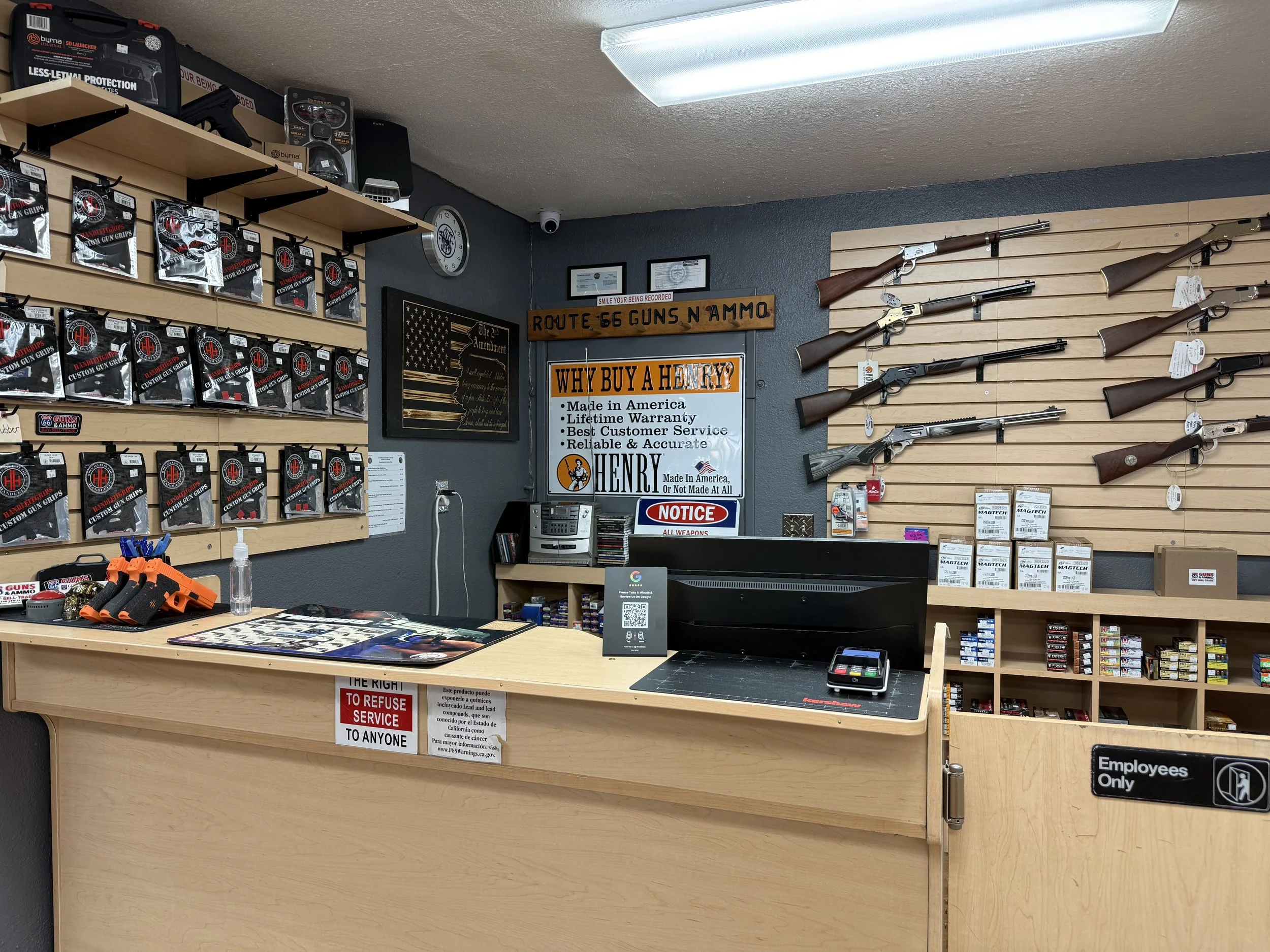
The Gun Counter where you will complete your background check at Route 66 Guns and Ammo in Barstow, CA.
What Happens During a Firearm Background Check in California?
Buying a firearm in California can feel confusing, especially if it is your first time. Between the paperwork, identification requirements, Firearm Safety Certificate, DROS, background check, and 10-day waiting period, many buyers are not sure what is actually happening behind the counter.
The good news is that the process is much easier to understand when it is broken down step by step. A California firearm background check is the state’s way of confirming that a person is legally allowed to purchase or receive a firearm before the firearm is released to them.
At Route 66 Guns & Ammo in Barstow, California, we help customers through this process every day. Whether you are a first-time buyer or an experienced firearm owner, our goal is to make the process clear, professional, and as smooth as possible.
What Is a California Firearm Background Check?
A firearm background check is a required review of a buyer’s eligibility before a firearm can be transferred. In California, this is handled through the Dealer Record of Sale, better known as DROS.
When you purchase a firearm from a licensed dealer, the dealer submits your information to the California Department of Justice. California DOJ then reviews records to determine whether you are legally eligible to own or possess a firearm. California DOJ states that a DROS application may be delayed when records match a buyer’s personal information and more time is needed to verify eligibility.
This background check is separate from simply picking out a firearm. Choosing the firearm is only the beginning. The firearm cannot be released until the required paperwork, background check, and waiting period are complete.
Step 1: You Choose the Firearm
The process starts when you select the firearm you want to purchase. This could be a handgun, rifle, shotgun, or another firearm that is legal to transfer in California.
At this stage, the dealer will make sure the firearm is eligible for sale and that the transaction follows California and federal law. If you are unsure what firearm fits your needs, this is also a good time to ask questions about personal protection, hunting, sport shooting, safe storage, ammunition, and general firearm ownership.
For customers in Barstow, Victorville, Hesperia, Apple Valley, and the surrounding High Desert, you can visit Route 66 Guns & Ammo for in-person help with firearms, ammunition, and accessories. Route 66 Guns & Ammo describes itself as a family-owned, locally operated Barstow gun shop offering firearms, ammo, accessories, and personalized guidance.
Step 2: You Complete the Required Paperwork
Once you are ready to begin the purchase, you will complete the required paperwork. This usually includes federal and California forms.
One of the main federal forms is ATF Form 4473, also called the Firearms Transaction Record. ATF explains that Form 4473 is used by federal firearms licensees to collect the information needed to determine whether a person may lawfully receive a firearm and to initiate the required background check.
In California, the dealer also submits the DROS information through the state system. The DROS process includes buyer information, firearm information, and other required details for the transfer.
It is very important that all information is accurate. Small mistakes with names, addresses, identification, or other details can create delays.
Step 3: The Dealer Submits the DROS
After the paperwork is completed, the dealer submits the DROS to the California Department of Justice. This is the official start of the California firearm background check.
The California DOJ public FAQ explains that the state DROS fee covers the cost of the background checks and transfer registry. As of the DOJ’s posted FAQ, the total state fee listed is $37.19, made up of the DROS fee, Firearms Safety Act Fee, and Safety and Enforcement Fee.
Once the DROS is submitted and accepted, the 10-day waiting period begins.
Step 4: California DOJ Reviews Your Eligibility
During the background check, California DOJ reviews records to determine whether the buyer is prohibited from owning or possessing firearms.
A person may be prohibited for different legal reasons, including certain criminal convictions, restraining orders, mental health prohibitions, or other state or federal restrictions. The purpose of the review is to confirm that the firearm is not being transferred to someone who is legally prohibited.
The FBI’s NICS information explains the general purpose of a firearm background check: to verify that the buyer does not have a criminal record or another disqualifying issue that would make them ineligible to purchase or own a firearm.
In California, the dealer does not personally approve or deny the buyer. The dealer submits the required information, and the eligibility decision comes through the proper background check system.
Step 5: The 10-Day Waiting Period Runs
California has a mandatory waiting period for firearm purchases. The California DOJ states that the waiting period is ten 24-hour periods from the date and time the DROS is accepted by DOJ and a unique DROS number is issued.
This means the waiting period is not simply “10 calendar days” in a casual sense. It is based on the exact date and time the DROS was accepted.
For example, if your DROS is accepted at 2:30 p.m., your earliest pickup time would generally be after ten full 24-hour periods have passed, assuming the background check is approved and all other requirements are met.
Step 6: The Background Check Is Approved, Delayed, Denied, or Otherwise Not Cleared
Most buyers hope for a simple approval. If everything clears properly, the firearm can be delivered after the waiting period is complete and all required pickup steps are finished.
However, a DROS can sometimes be delayed. California DOJ states that the Department is authorized under Penal Code section 28220 to temporarily delay a firearm transaction for up to 30 days when it cannot immediately determine the purchaser’s eligibility.
A delay does not always mean a denial. It may mean DOJ needs more time to review records, confirm identity, or obtain missing information. If a transaction is denied, the buyer may need to follow the proper DOJ process to understand or challenge the denial.
Do You Need a Firearm Safety Certificate?
In most cases, yes. California requires most people to have a valid Firearm Safety Certificate, often called an FSC, before purchasing or acquiring a firearm.
California DOJ states that, unless exempt, a person must have a valid FSC before purchasing or acquiring a firearm and must present it to the firearms dealer when beginning the transaction.
If you do not have an FSC yet, many California firearm dealers can help you take the test before starting your firearm purchase. Route 66 Guns & Ammo also has a page for its firearm safety course and FSC help for customers in Barstow and nearby areas.
What Should You Bring for a California Firearm Background Check?
Requirements can vary depending on the type of firearm, your residency situation, and the specific transaction. In general, customers should be prepared with proper identification, proof of residency if required, and a valid FSC or exemption.
Because California firearm paperwork is strict, it is smart to call ahead before visiting the store. This helps prevent wasted trips and avoids starting a transaction without the documents you need.
At Route 66 Guns & Ammo, our staff can explain what documents may be needed for your specific purchase or transfer.
Can You Take the Firearm Home the Same Day?
In most regular firearm purchase situations in California, no. Even if the background check is submitted right away, the firearm cannot be released until the mandatory waiting period is complete and the transfer is approved.
The 10-day waiting period is one of the biggest differences between buying a firearm in California and buying one in some other states. First-time buyers are often surprised by this, but it is a normal part of the California firearm purchase process.
What Happens When You Come Back to Pick Up the Firearm?
When your waiting period is complete and the transaction is approved, you return to the dealer for pickup.
Before the firearm is released, the dealer may need to verify your identity again, complete final paperwork, confirm safe handling requirements, and make sure all required laws have been followed.
You should not assume pickup is automatic just because 10 days have passed. The dealer still has to confirm that the firearm is eligible to be released.
Why Working With a Good Local Gun Store Matters
California firearm laws can be frustrating, especially when you are trying to understand the process for the first time. A good local gun store can make a major difference.
At Route 66 Guns & Ammo, we help customers understand the buying process, DROS, firearm safety requirements, pickup timelines, and California-specific rules. We proudly serve Barstow, Victorville, Hesperia, Apple Valley, Phelan, and surrounding High Desert communities.
If you have questions about buying a firearm, trading in a firearm, FSC testing, ammunition, accessories, or current firearm specials, our team is here to help.
Final Thoughts
A California firearm background check is a required part of buying or receiving a firearm through a licensed dealer. The process includes paperwork, DROS submission, DOJ review, the 10-day waiting period, and final pickup requirements.
While the process may seem intimidating at first, it is much easier when you work with a knowledgeable dealer who can walk you through each step.
If you are planning to buy a firearm in California, stop by Route 66 Guns & Ammo in Barstow or contact our team before your visit. We will help you understand what to bring, what to expect, and how the process works.
FAQ Section
-
California has a mandatory 10-day waiting period for most firearm purchases. DOJ may also delay a transaction for up to 30 days if more time is needed to determine eligibility.
-
DROS stands for Dealer Record of Sale. It is the California system used when a licensed firearms dealer submits firearm purchase or transfer information to the California Department of Justice.
-
Not necessarily. A delay can happen when DOJ needs more time to review records, verify identity, or determine eligibility. A delay is not the same thing as an automatic denial.
-
In most cases, yes. Unless you are exempt, California requires a valid Firearm Safety Certificate before purchasing or acquiring a firearm.
-
Yes. Route 66 Guns & Ammo helps customers with firearm purchases, FSC information, DROS questions, ammunition, accessories, firearm specials, and buy, sell, or trade services in Barstow, California.