
How to Buy a Gun in California: Step-by-Step Guide
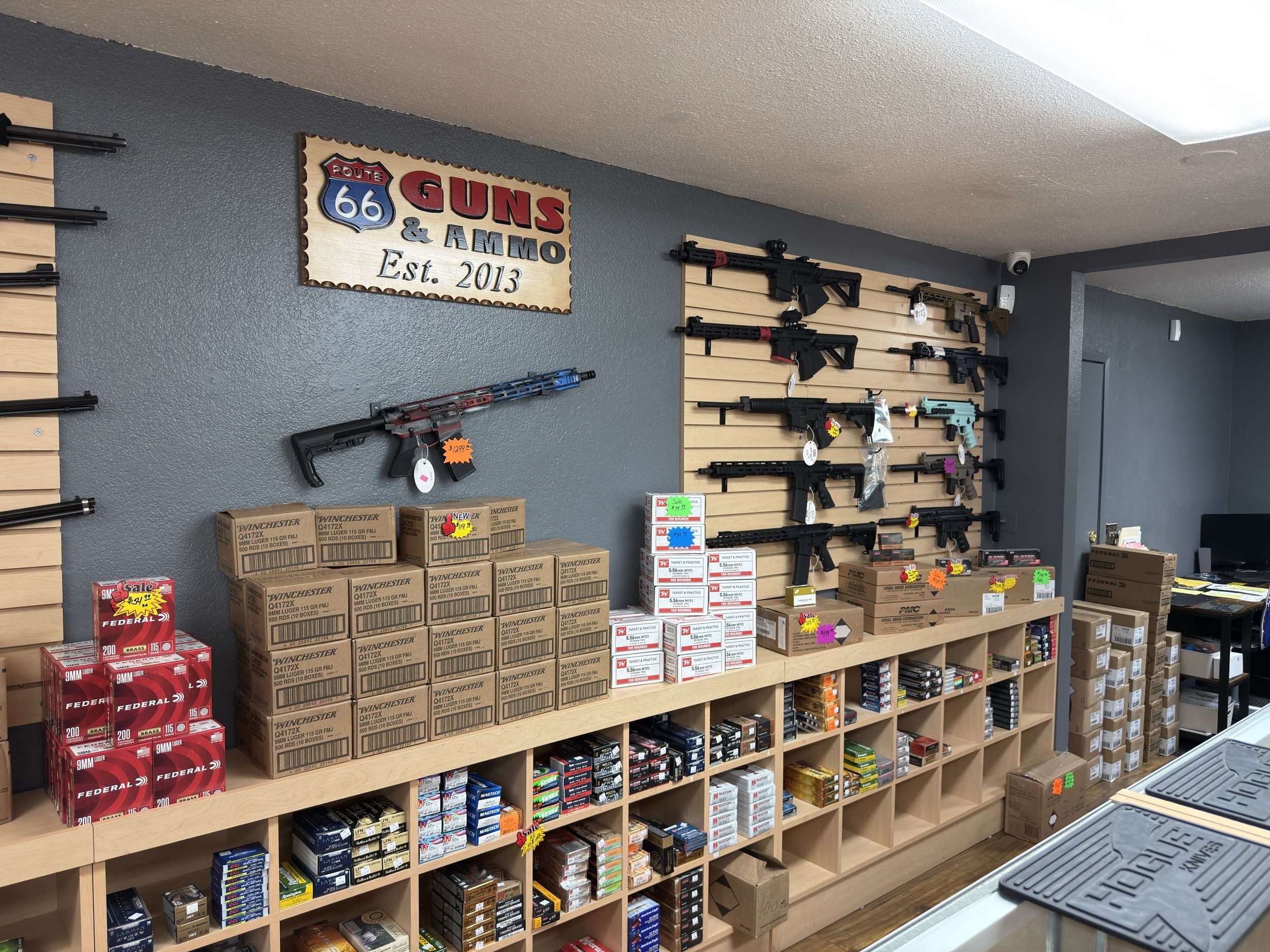
Buying a gun in California can feel confusing, especially if it is your first time. Between the Firearm Safety Certificate, DROS paperwork, background check, 10-day waiting period, proof of residency, and pickup requirements, it is easy to feel like you are missing something.
The good news is that the process is much easier when you understand the steps before you walk into the store. At Route 66 Guns & Ammo in Barstow, CA, we help customers with new firearms, used firearms, accessories, special orders, private party transfers, and in-store California Firearm Safety Certificate testing. Route 66 Guns & Ammo is a family-owned, locally operated gun shop that serves customers looking for personal protection, hunting gear, sport shooting equipment, ammunition, and accessories.
This guide breaks down how to buy a gun in California step by step so you know what to expect before starting your purchase.
Quick Answer: How Do You Buy a Gun in California?
To buy a gun in California, you generally need to choose a California-legal firearm, bring valid identification, have or obtain a Firearm Safety Certificate unless exempt, complete the Dealer’s Record of Sale background check through a licensed California firearms dealer, wait the required 10-day waiting period, complete the safe handling demonstration, and then pick up the firearm after approval.
California DOJ explains that firearm purchases and transfers, including private party transfers and gun show sales, generally must go through a California licensed dealer under the DROS process. California also requires a 10-day waiting period before the firearm can be released.
Step 1: Make Sure You Are Eligible to Buy a Firearm
Before you start the process, make sure you are legally eligible to purchase and possess a firearm. In California, licensed dealers are generally prohibited from selling or transferring firearms to anyone under 21, although there are specific exemptions for certain non-handgun firearms for people 18 or older, such as valid hunting license holders, qualifying military members, and certain law enforcement categories.
You also cannot legally purchase or possess a firearm if you fall into a prohibited category. California DOJ lists several prohibiting factors, including certain felony or misdemeanor convictions, narcotic addiction, certain mental health holds, domestic restraining or protective orders, probation conditions, and certain juvenile offenses.
If you are unsure whether something in your record may prevent you from buying a firearm, California DOJ offers a Personal Firearms Eligibility Check, often called a PFEC. However, DOJ notes that a PFEC does not include the federal NICS check, so it is not a complete guarantee of approval.
Step 2: Bring the Right Identification and Documents
One of the biggest reasons firearm purchases get delayed is missing or incorrect documentation. Before going to the gun store, make sure you bring the right documents.
For identification, California DOJ states that clear evidence of identity and age means a valid California driver license or California identification card issued by the DMV. Military identification may also be acceptable when accompanied by permanent duty station orders showing a posting in California. Temporary driver licenses and temporary identification cards are not accepted for firearm purchases.
If your California driver license or ID says “Federal Limits Apply,” the dealer may require additional proof that you are lawfully present in the United States. California DOJ has advised that dealers may ask for documents such as a valid U.S. passport, certified U.S. birth certificate, Certificate of Naturalization, Certificate of Citizenship, or valid Permanent Resident Card.
You will also need a valid Firearm Safety Certificate, commonly called an FSC, unless you qualify for an exemption. California DOJ states that you must present your FSC to the firearms dealer when you begin the transaction and again at delivery.
For handgun purchases, you also need proof of California residency. Acceptable examples include a utility bill from within the last three months, a residential lease, a property deed, or a current government-issued license, permit, or registration with your name and address. California DOJ also lists examples such as a current DMV registration, CCW permit, resident hunting license, fishing license, or signed rental agreement. Bank statements, pay stubs, cellular phone bills, and voter registration are not acceptable proof of residency for handgun purchases.
Step 3: Get Your Firearm Safety Certificate
If you do not already have an FSC, you can take the test before starting your firearm purchase. California DOJ says the FSC test requires a score of at least 75%, which means 23 correct answers out of 30. The test covers basic firearm safety and firearm laws, and it is administered by DOJ Certified Instructors who are often located at firearms dealerships. The FSC test fee is $25, and the certificate is valid for five years.
Route 66 Guns & Ammo offers the California DOJ Firearm Safety Certificate test in-store, so customers can complete this requirement before beginning the purchase process.
Step 4: Choose a California-Legal Firearm
Not every firearm available in other states can be sold in California. This is especially important with handguns. California DOJ states that only handgun models listed on the DOJ Roster of Handguns Certified for Sale may generally be sold in California, with exemptions such as private party transfers and law enforcement transactions.
This is where working with a knowledgeable California gun store matters. A firearm may look normal online but still have California compliance issues. Before ordering a firearm or starting paperwork, ask the dealer to confirm that the firearm can legally be transferred in California.
Route 66 Guns & Ammo carries new firearms, used firearms, handguns, shotguns, lever-action rifles, long guns, accessories, and ammunition. The shop also works with brands such as Glock, Henry Repeating Arms, Smith & Wesson, Ruger, Springfield Armory, Aero Precision, Juggernaut Tactical, and more.
Step 5: Start the DROS Background Check
After you choose your firearm and have the required documents, the dealer will begin the DROS process. DROS stands for Dealer’s Record of Sale. This is the background check and firearm transfer paperwork submitted through the California DOJ system.
California DOJ states that the total state fee for purchasing a firearm is $37.19, which includes the DROS fee, Firearms Safety Act Fee, and Safety and Enforcement Fee. For private party transfers, the dealer may charge an additional fee of up to $10 per firearm. For non-private-party transactions, dealers may charge other fees as long as those charges are clearly disclosed and not misrepresented as state fees.
Route 66 Guns & Ammo handles private party transfers in California and also lists interstate transfer services for firearms. The shop notes that it does not accept ammunition transfers, but it does offer special order ammunition.
Step 6: Wait the Required 10 Days
California has a mandatory waiting period. California DOJ states that the waiting period is ten 24-hour periods from the date and time the DROS is accepted by DOJ and a unique DROS number is issued.
This means that if your paperwork starts at 3:00 p.m., your pickup time is not simply “10 days later when the store opens.” It is based on the exact date and time the DROS was accepted. Always confirm your exact pickup time with the dealer before making the trip.
California also has a pickup deadline. DOJ states that if you do not take physical possession of the firearm within 30 days of the DROS submission, the dealer must cancel the sale. If you still want the firearm, you must repeat the DROS process, pay the DROS fees again, and wait another 10 days.
Step 7: Complete the Safe Handling Demonstration
Before delivery, California requires a safe handling demonstration unless you qualify for an exemption. California DOJ describes this as a requirement where the purchaser performs specific steps related to safely loading and unloading the firearm. The demonstration must be done under the supervision of an FSC Program DOJ Certified Instructor, and the purchaser must sign an affidavit confirming completion.
The safe handling demonstration must be performed after the DROS is submitted and before the firearm is delivered. DOJ also notes that the demonstration can be helpful to perform before starting DROS to make sure you are comfortable with the firearm you selected.
Step 8: Bring a Lock or Confirm Safe Storage Requirements
California has firearm safety device requirements. California DOJ says each firearm sold by a firearms dealer must be accompanied by a child safety warning label, and firearm safety devices must be tested and approved for inclusion on the DOJ Roster of Firearm Safety Devices.
DOJ also explains that a purchaser may satisfy the firearm safety device requirement by presenting a DOJ-approved safety device purchased within the 30 days before taking possession, along with the device and a receipt showing the purchase date and model name. Another option may involve demonstrating ownership of a qualifying gun safe through the required documentation.
Because these details can be specific, it is smart to ask the dealer before pickup what lock, safe affidavit, or paperwork you need to bring.
Step 9: Pick Up Your Firearm After Approval
Once the waiting period has passed, DOJ has not denied the transaction, your documents are still valid, and all delivery requirements are complete, you can pick up your firearm.
Bring your identification, FSC or exemption documentation, proof of residency if required, and any safety device documentation you were told to bring. If your ID or proof of residency expires before pickup, that can create a problem, so double-check dates before starting the process.
How Many Guns Can You Buy in California?
California DOJ currently states that a person may not make an application to purchase one or more firearms that would result in purchasing more than three firearms cumulatively within any 30-day period, except in limited circumstances listed in Penal Code section 27535.
This is important if you are planning multiple purchases, private party transfers, or special orders. Always ask the dealer before starting paperwork if you are unsure whether your purchase timing may create an issue.
Can You Buy a Gun From a Private Seller in California?
Generally, no, you cannot simply buy a firearm directly from another person without going through a dealer. California DOJ explains that private party transfers must generally be conducted in person through a fully licensed California firearms dealer. The buyer must still meet the normal firearm purchase and delivery requirements.
Route 66 Guns & Ammo handles private party transfers in California, making the process easier for both the buyer and seller.
First-Time Buyer Tips
If this is your first firearm purchase, do not feel pressured to know everything before walking in. A good gun store should be able to explain the process, help you compare options, and make sure you understand the paperwork before you start.
Before choosing a firearm, think about your purpose. Are you buying for home defense, range practice, hunting, collecting, or sport shooting? The right firearm for one person may not be the right firearm for another. Fit, comfort, recoil, ammunition cost, California compliance, and safe storage should all be part of the conversation.
At Route 66 Guns & Ammo, our staff can help you look at new and used firearm options, review current firearm specials, discuss special orders, and walk you through the California purchase process from start to finish.
FAQ: Buying a Gun in California
Do I need a Firearm Safety Certificate to buy a gun in California?
Yes, unless you qualify for an exemption. California DOJ states that you must have a valid FSC before purchasing or acquiring a firearm and must present it to the dealer when starting the transaction and at delivery.
How long does it take to buy a gun in California?
California requires a 10-day waiting period. The waiting period is ten 24-hour periods from the date and time the DROS is accepted by DOJ.
Do I need proof of residency to buy a handgun in California?
Yes. California DOJ states that handgun purchasers must provide proof of California residency. Examples include certain utility bills, residential leases, property deeds, current DMV registration, CCW permits, and other qualifying government-issued licenses or registrations.
Can I buy a gun online and pick it up at a California gun store?
Online firearm purchases still have to go through a licensed California firearms dealer for transfer, background check, waiting period, and delivery requirements. Not every firearm sold online is California compliant, so always confirm with the receiving dealer before ordering.
Can I buy more than one gun in California?
California currently limits most buyers to no more than three firearms cumulatively within any 30-day period, with limited exceptions.
Does Route 66 Guns & Ammo offer the FSC test?
Yes. Route 66 Guns & Ammo offers the California DOJ Firearm Safety Certificate test in-store.
Visit Route 66 Guns & Ammo in Barstow, CA
If you are ready to buy a gun in California or you still have questions about the process, visit Route 66 Guns & Ammo in Barstow. We help customers with new firearms, used firearms, private party transfers, accessories, ammunition, FSC testing, and special orders.
Route 66 Guns & Ammo is located at 1581 West Main St A, Barstow, CA 92311, and is open Tuesday through Saturday from 10:00 a.m. to 6:00 p.m.
Disclaimer: This guide is for general educational purposes only and is not legal advice. California firearm laws can change, and individual situations may vary. Always confirm current requirements with a licensed California firearms dealer or qualified legal professional before starting a firearm transaction.